 teambooks.app···
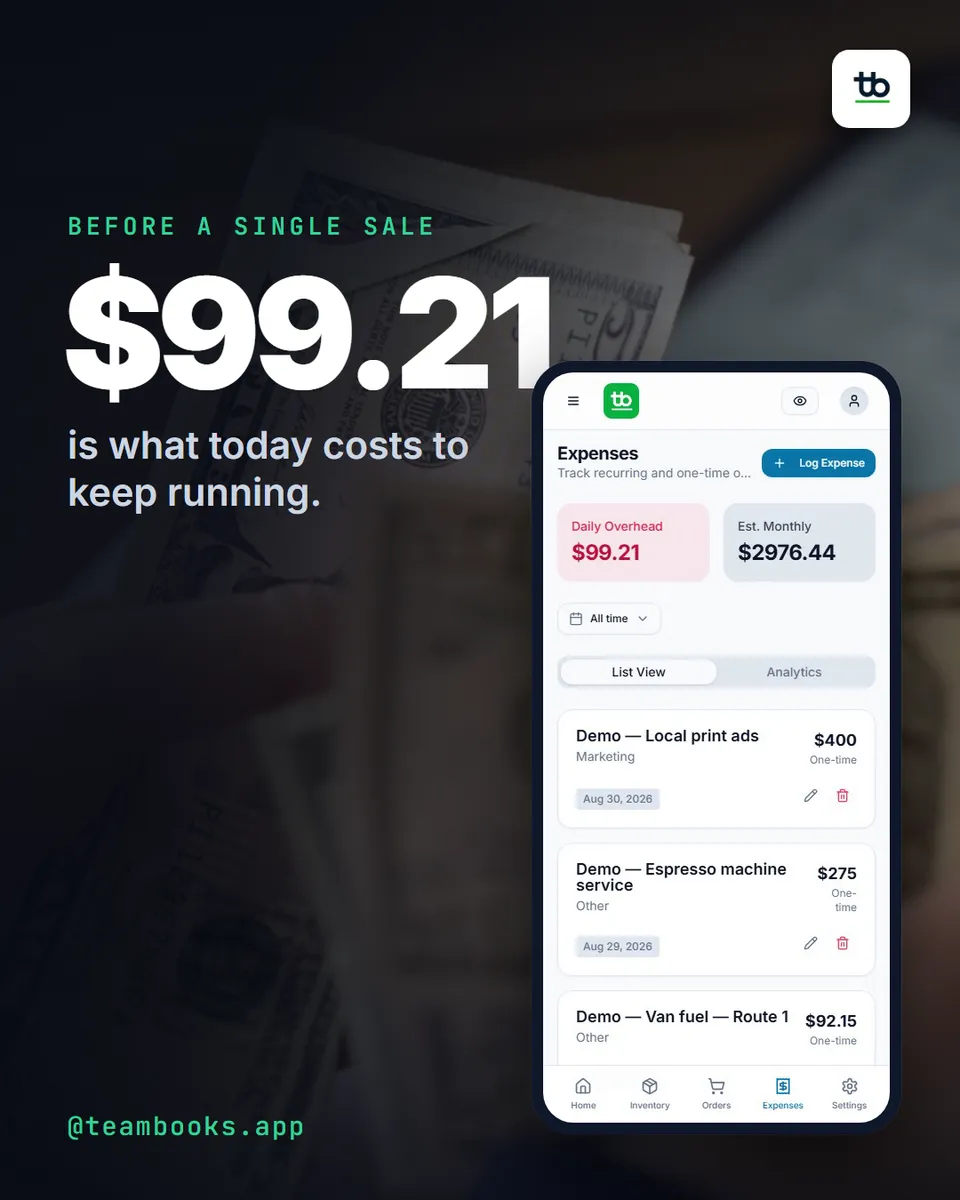
teambooks.app You know what you sold today. Do you know what today cost?
TeamBooks works out the overhead that is actually running right now — only the recurring costs live on this date, not the ones that ended last year and kept charging anyway.
One number for what it costs to open tomorrow.
@teambooks.app
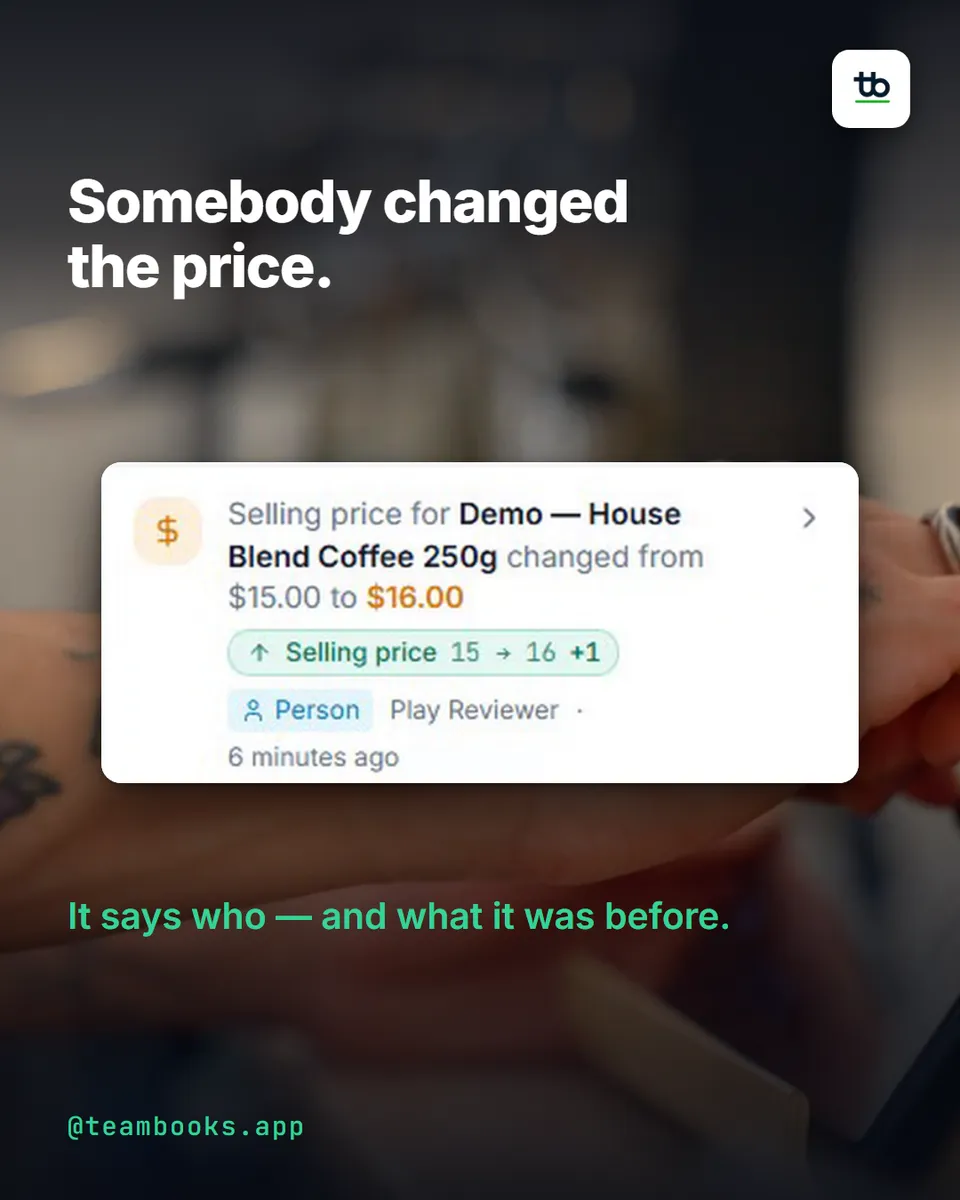
teambooks.app··· teambooks.app "Who changed that?" is the question, and most tools answer it with a row of database fields.
TeamBooks answers it in a sentence: which product, which field, what it was, what it is now, and whether a person did it or the overnight sync did.
And when it cannot describe a change honestly, it says so instead of inventing one.
@teambooks.app
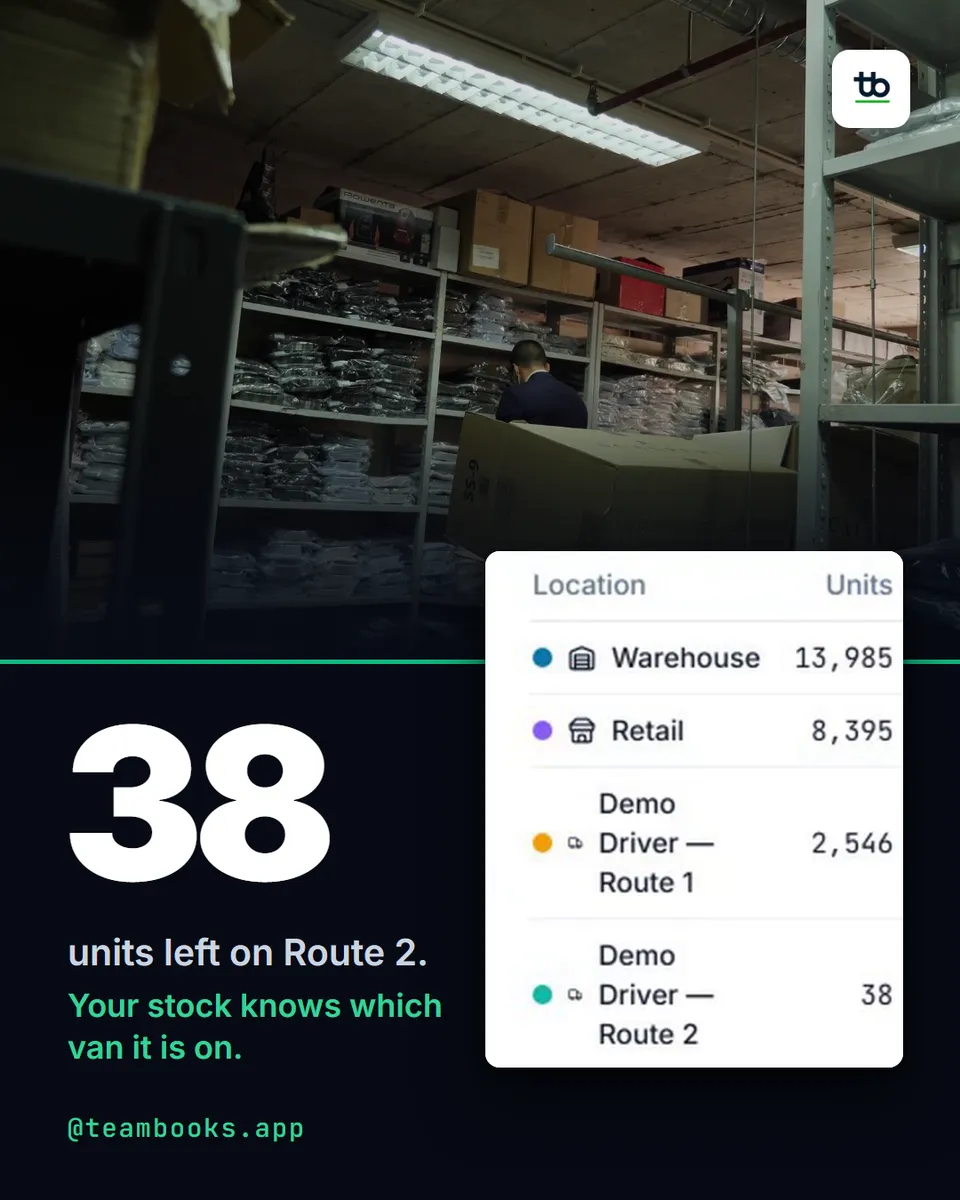
teambooks.app··· teambooks.app Twenty thousand units on hand, and the one that matters tonight is 38.
Stock in TeamBooks sits somewhere specific: the warehouse, the shop floor, or a named van. The warehouse number is worked out from the total minus everything loaded out, so the rows always add up — they cannot quietly drift apart.
If more is out than you own, it says so instead of hiding it.
@teambooks.app
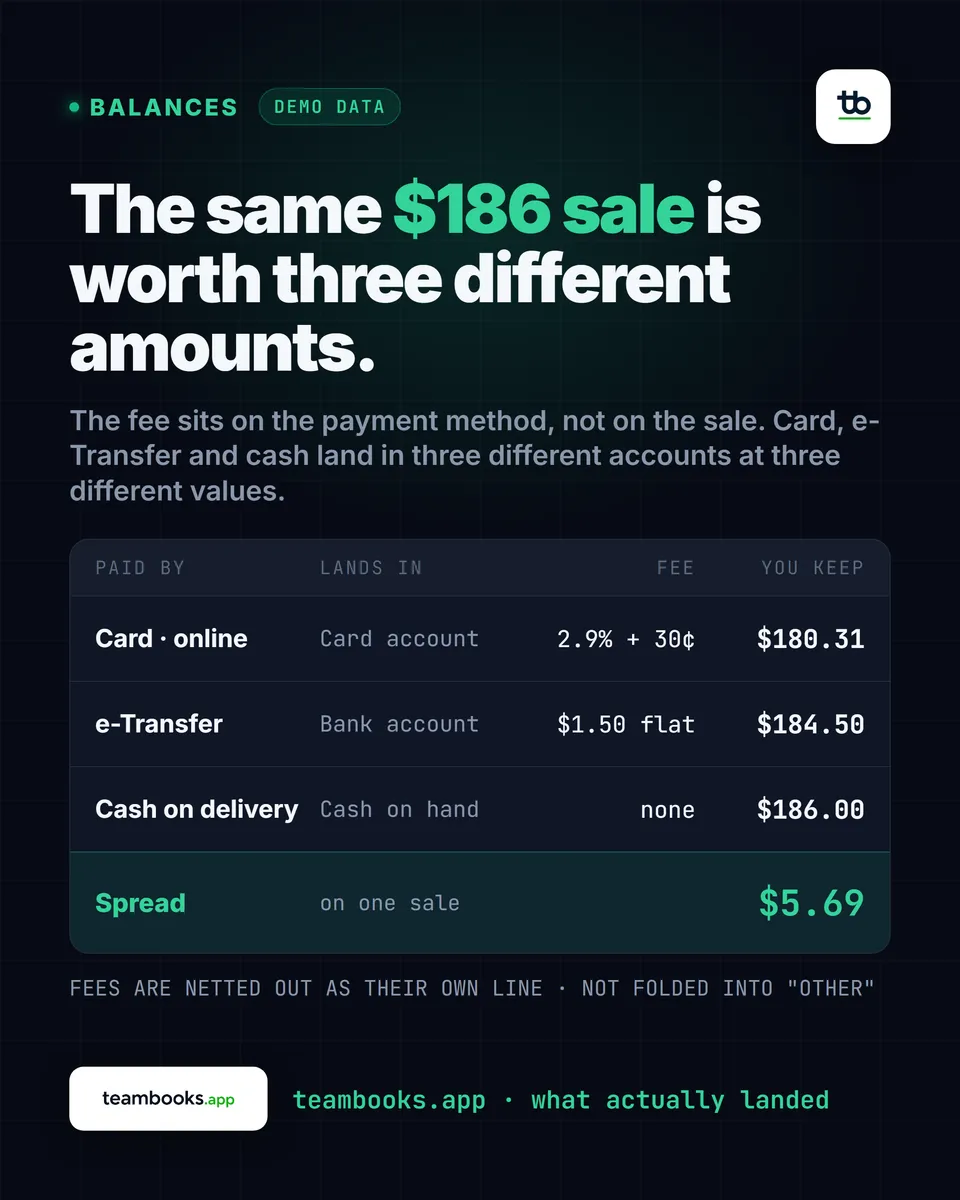
teambooks.app··· teambooks.app A sale is not money until it lands somewhere — and where it lands changes what it was worth.
Same $186 order. Paid by card it arrives as $180.31, because the fee comes off before you ever see it. Paid by e-Transfer it arrives as $184.50. Paid in cash it arrives whole. Three accounts, three balances, one order number.
$5.69 on one sale is easy to shrug at. It is also the reason your deposit never quite matches your sales report, and the gap only ever grows with volume.
All figures are demo data.
→ teambooks.app · what actually landed
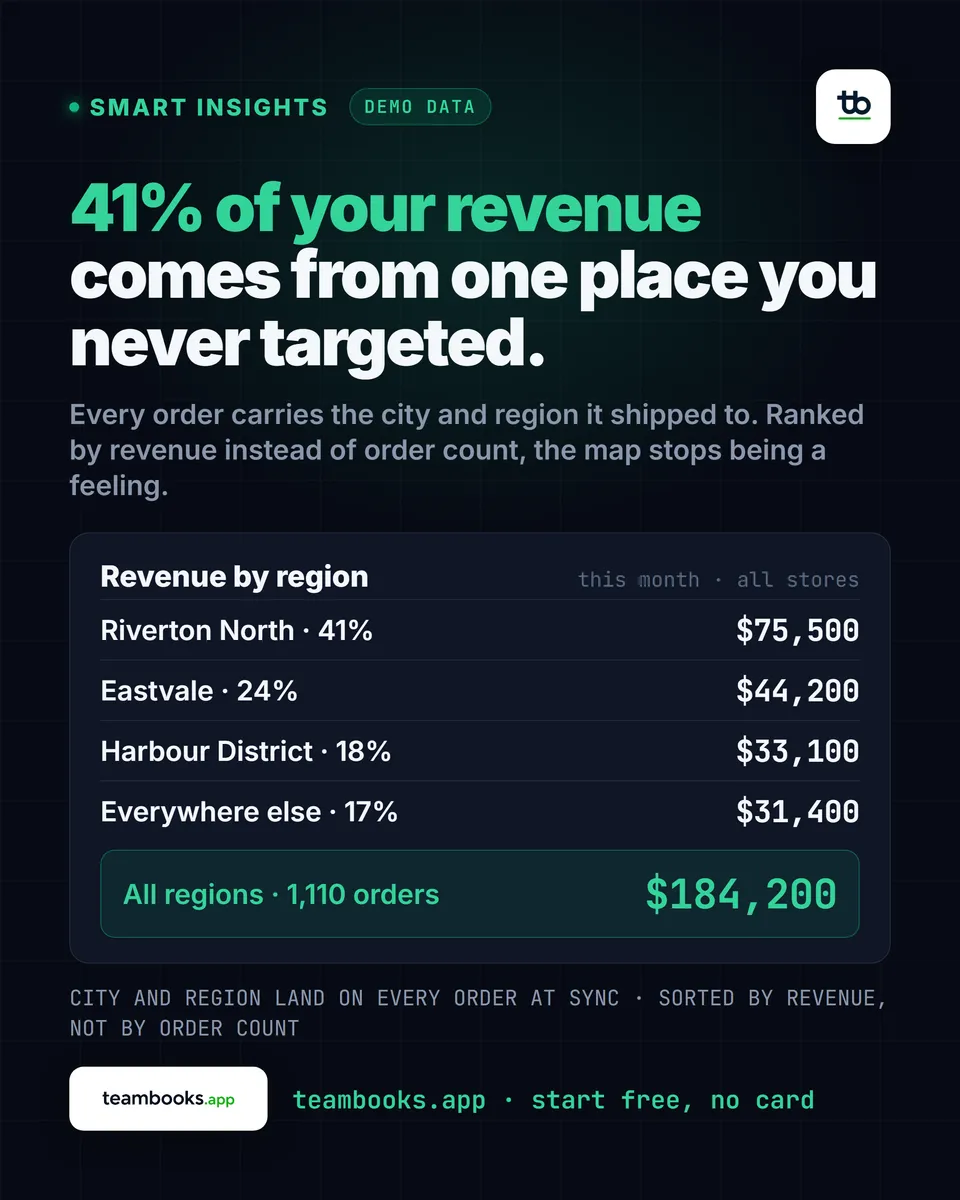
teambooks.app··· teambooks.app Ask an owner where their customers are and you'll get the answer from memory. It is usually the place with the most orders, not the most money.
Every order already carries the city and region it shipped to. Rank those by revenue instead of by count and the picture moves — the busy area with small baskets drops, and somewhere you have never advertised turns out to be 41% of the month.
That changes delivery zones, where the next location goes, and which postcode is worth a flyer.
All figures are demo data.
→ teambooks.app · start free, no card
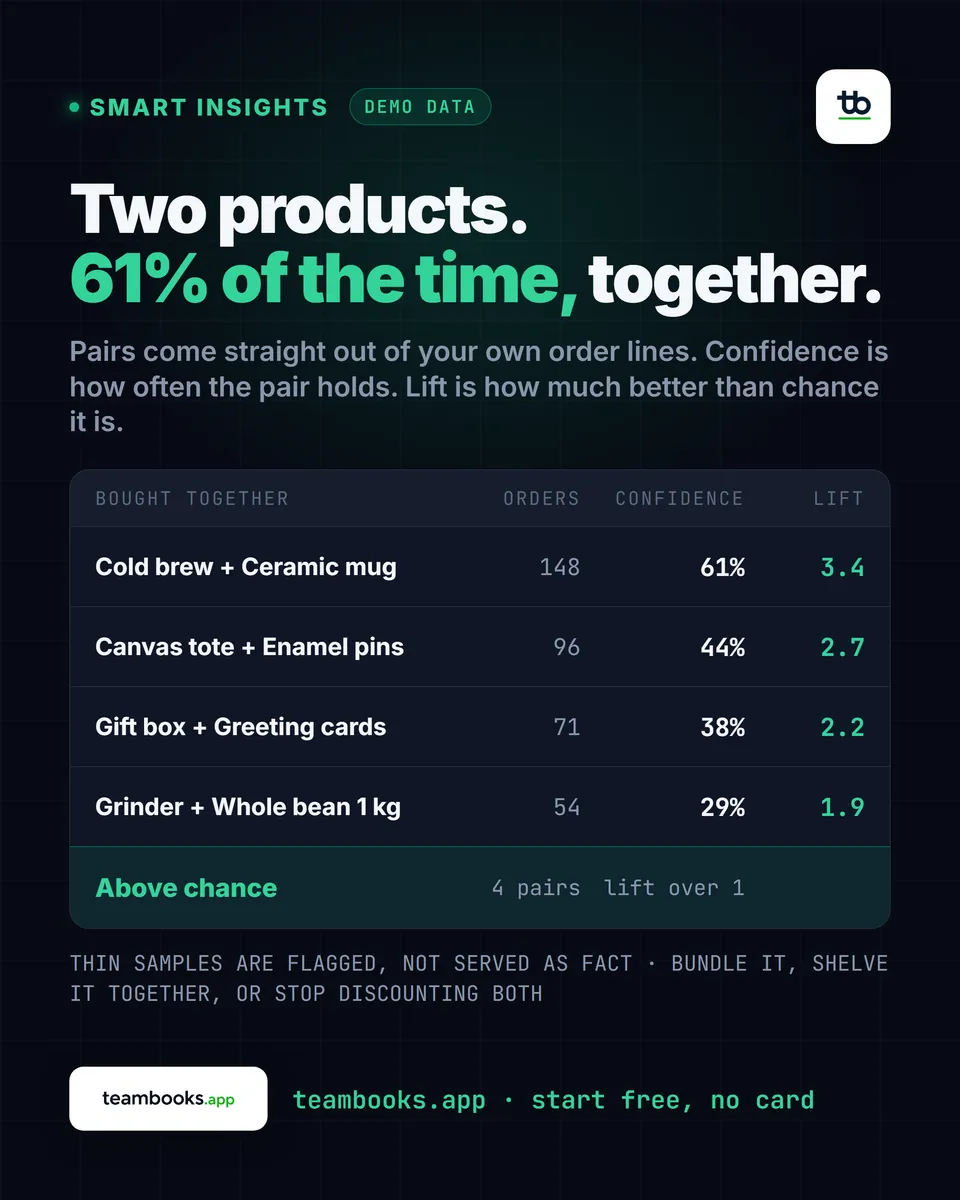
teambooks.app··· teambooks.app You already know one or two of these pairs. You do not know the fourth one, and the fourth one is where the money is.
What sells with what comes straight out of your own order lines. Confidence is how often the pair actually holds. Lift is how much better than random it is — anything above 1 is a real association, not a coincidence you noticed once on a Saturday.
Then it's just a decision: bundle it, shelve them together, or stop discounting both halves of a pair that was never going to split up anyway.
All figures are demo data.
→ teambooks.app
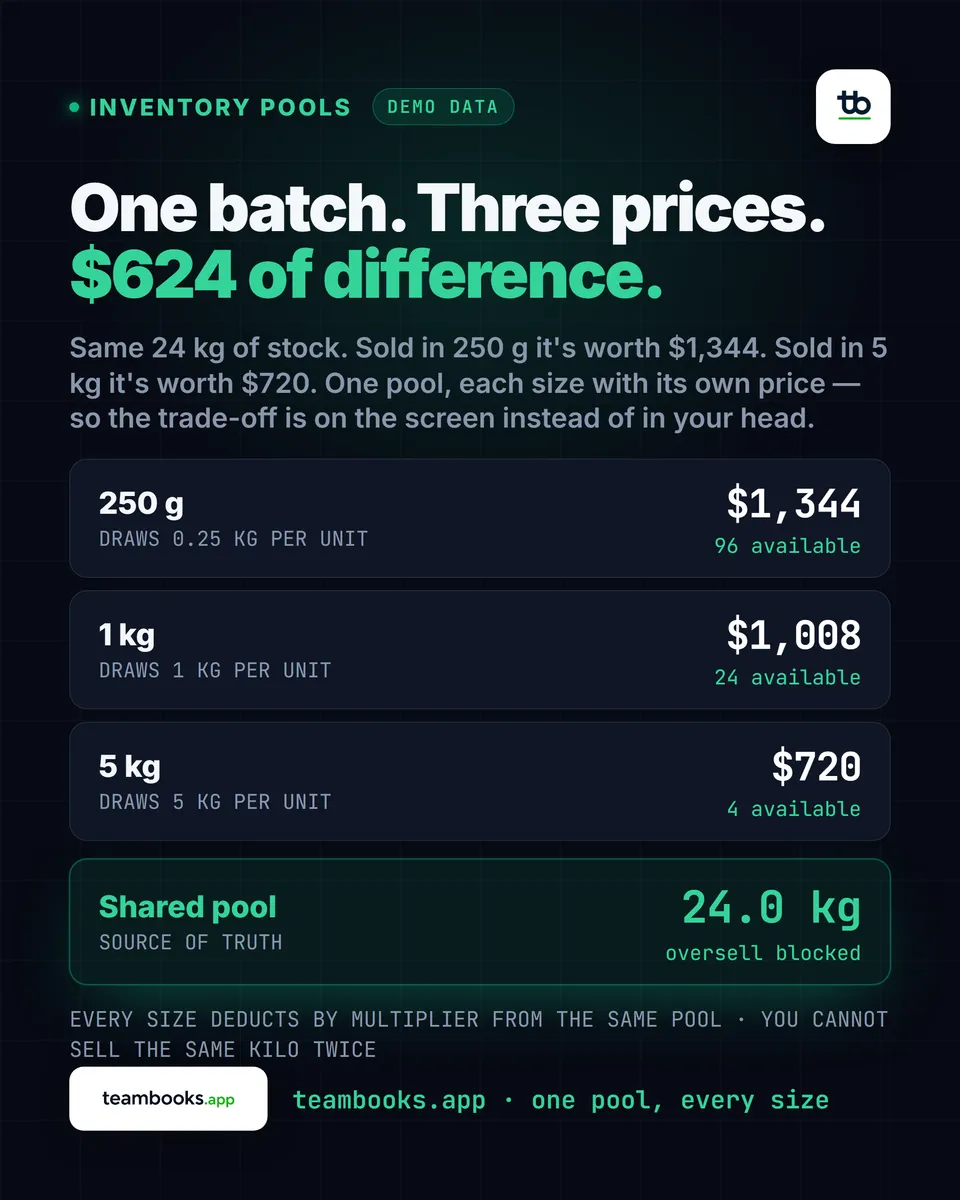
teambooks.app··· teambooks.app 96 available. 24 available. 4 available.
It's one 24 kg batch. Those aren't three stock numbers, they're the same stock counted three ways — and if your system stores them as three separate products you will eventually sell the same kilo twice.
The fix is a shared pool: each pack size deducts what it actually consumes, so availability is derived rather than counted. And once it's one pool, the more interesting number shows up on its own — that batch is worth $1,344 broken into 250 g bags and $720 sold as 5 kg. Same stock, $624 apart.
All figures are demo data.
→ teambooks.app · start free, no card
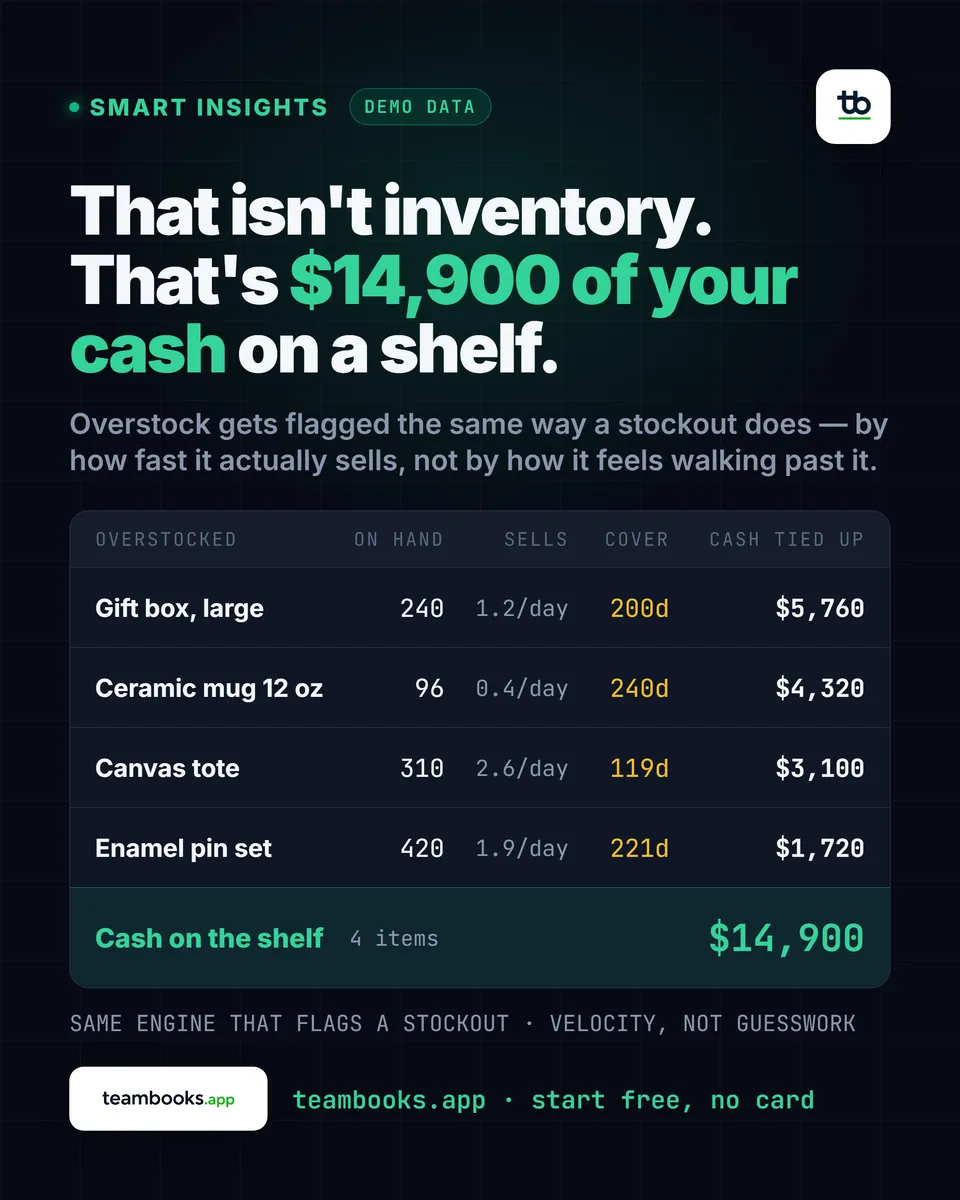
teambooks.app··· teambooks.app 240 gift boxes selling 1.2 a day is 200 days of cover.
That isn't inventory. That's cash you already spent, sitting still — and it doesn't show up anywhere as a problem, because nothing is out of stock.
Overstock gets flagged by the same engine that flags a stockout: how fast something actually sells, against how much of it you're holding. Four lines, $14,900, in this demo.
All figures are demo data.
→ teambooks.app · free to start, no card
#inventorymanagement #retailinventory #deadstock #cashflow #smallbusinessfinance #ecommerce #retailtips #bookkeeping